Between Bodies
Blind Massage, Embodied Knowledge, and Care in China
China | June–present 2026
Entering the Field
In the summer of 2026, I conducted ethnographic fieldwork at a small blind massage clinic in China as part of my master's research in Social and Cultural Anthropology at the University of Zurich.
My research began with an interest in how massage practitioners develop and use their sense of touch, and how bodily knowledge is acquired, practised, and communicated through everyday therapeutic encounters.
Over the course of my fieldwork, I spent time observing the daily routines of the clinic, speaking with practitioners and clients, and learning massage techniques through practical participation. As I gradually became familiar with the movements, rhythms, and physical demands of massage, my attention shifted towards the material and sensory dimensions of care.
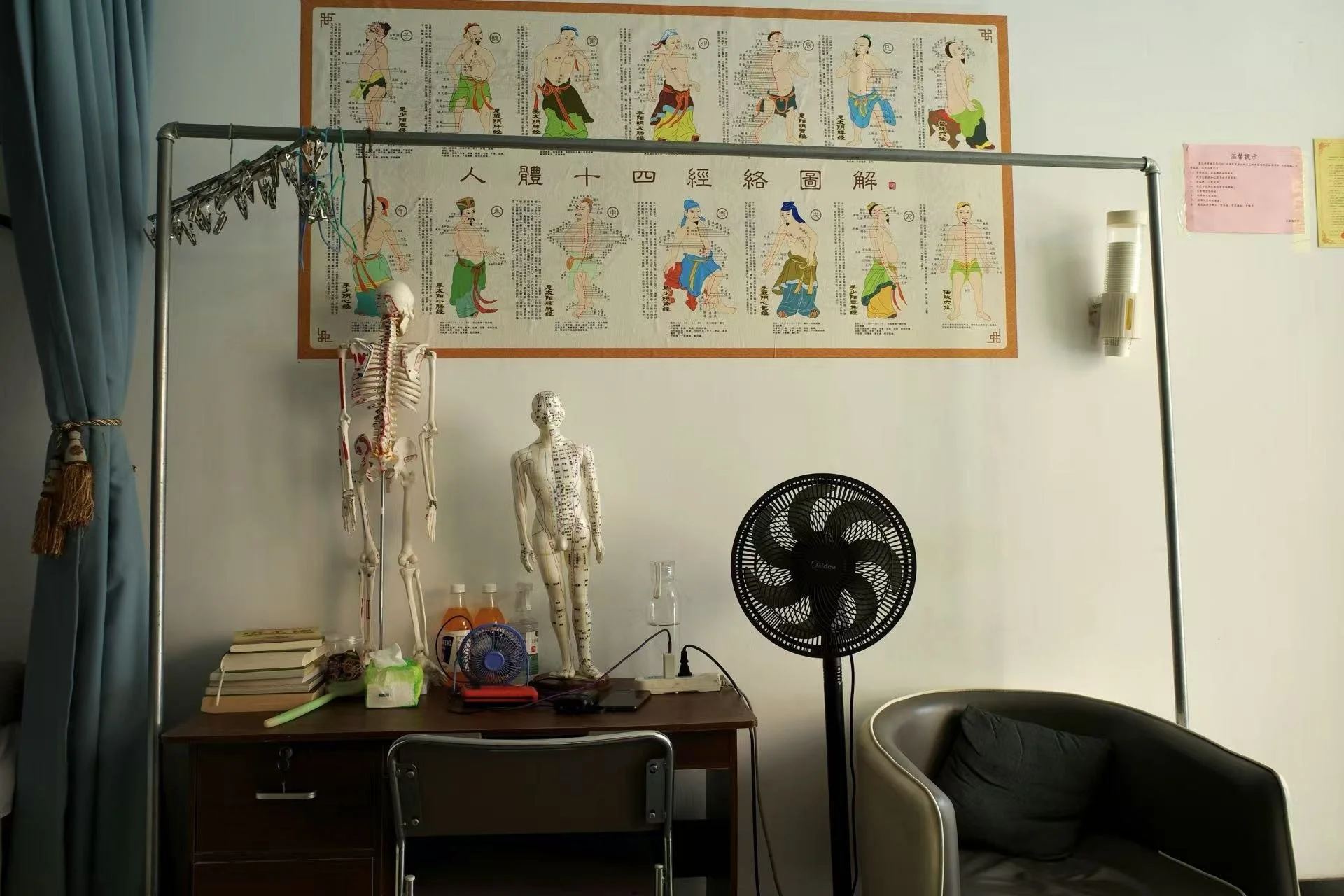
Picture took in the front of the reception
Learning Through Touch
Massage is a practice in which knowledge is not always easily expressed in words. Practitioners learn to recognise bodily tensions, adjust pressure, and respond to subtle sensations through repeated tactile encounters.
By learning massage techniques myself, I began to explore how such knowledge develops through bodily experience. The process also made me more attentive to the relationships between the practitioner's hands, the client's body, and the materials involved in each treatment.
Among these materials, the cloth placed between practitioner and client became particularly interesting to me. Rather than treating it as a passive accessory, I began to consider how it shapes physical contact, mediates sensations, and participates in the practice of care.
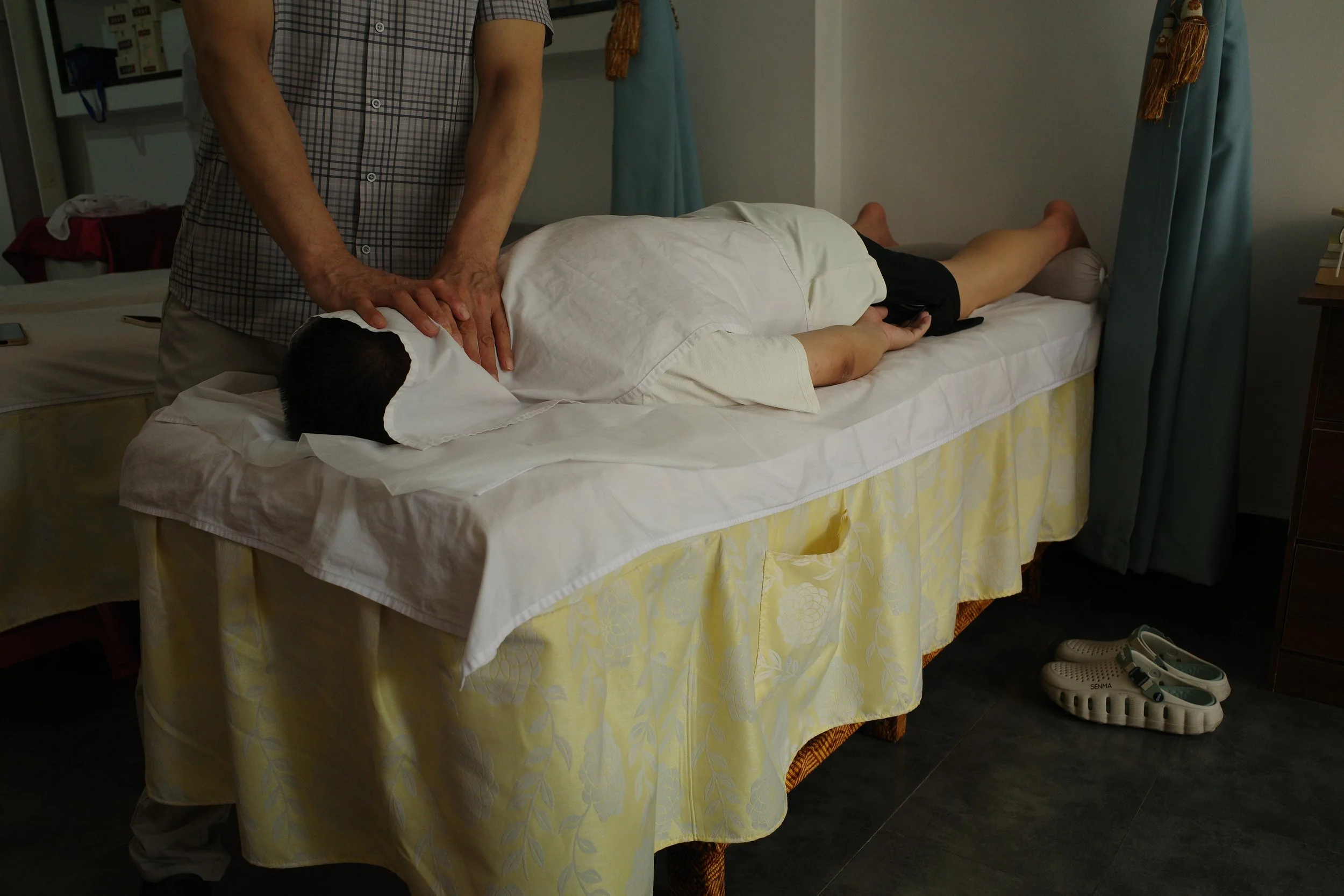
The client is taking a blind massage
The Materiality of Care
As my fieldwork progressed, I became increasingly interested in how care takes shape through ordinary material arrangements and bodily practices.
Massage involves more than the application of manual techniques. It unfolds through interactions between bodies, objects, spaces, and sensory experiences. Towels, massage beds, clothing, and other seemingly mundane materials help shape how touch is delivered, experienced, and understood.
Through participant observation, practical learning, and ethnographic interviews, this ongoing research explores how care is enacted through touch and material practices, and how embodied knowledge becomes part of everyday therapeutic work.
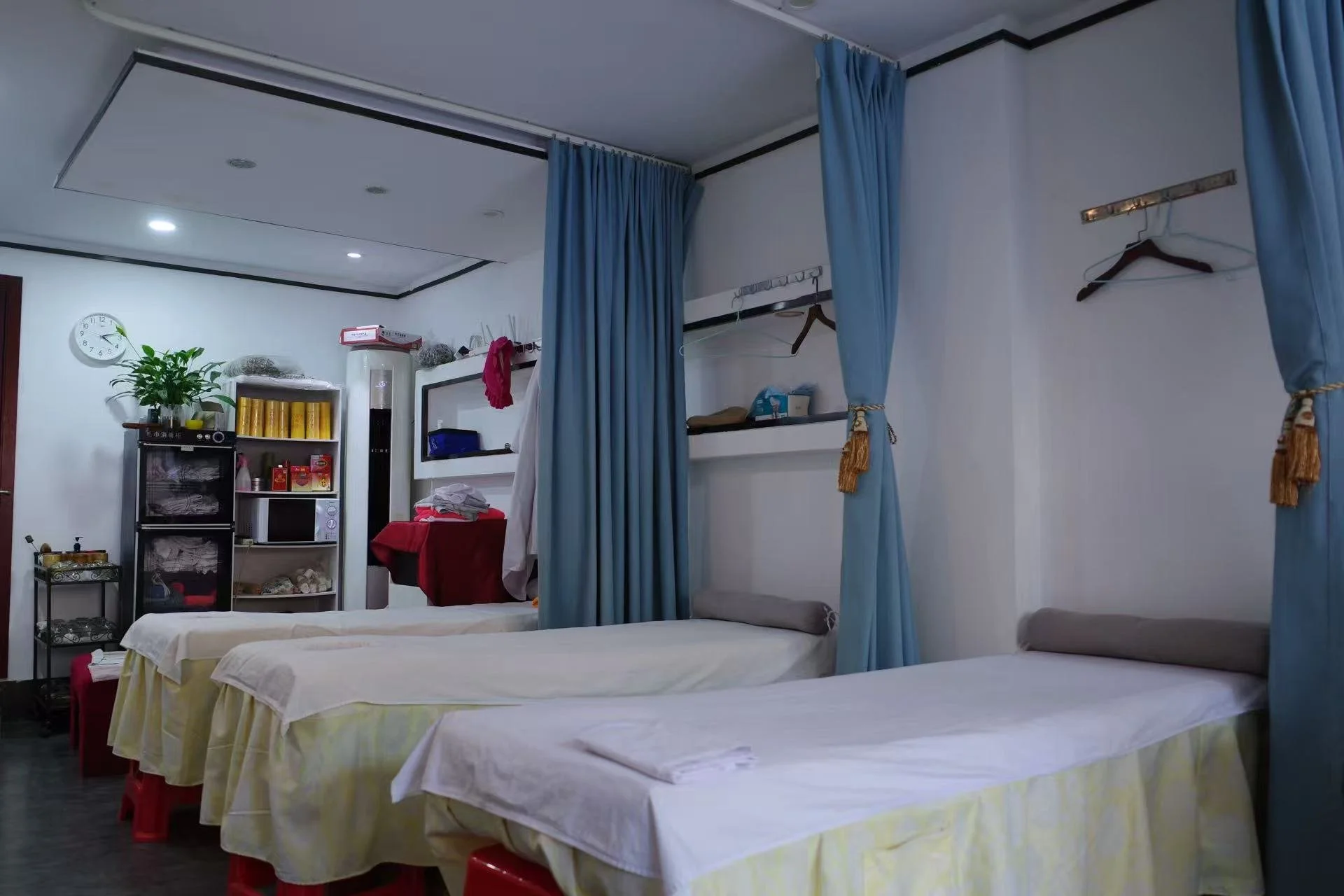
Room setting
Master's thesis research | Department of Social Anthropology and Cultural Studies, University of Zurich