Renaming Shoes
An Ethnographic Inquiry into Miao Footwear, Naming, and Material Culture
Guizhou, China | June 2026
From Zurich to Guizhou
This project emerged during the preparation of Renaming – People, Things, Places, an exhibition at the Ethnographic Museum of the University of Zurich. As part of a university seminar contributing to the exhibition, I became interested in a pair of embroidered footwear from Shidong, Guizhou, identified in the museum's collection as shoes.
I began to wonder whether these shoes had a particular name in their original cultural context, and in what cultural and everyday settings they were traditionally worn. These questions led me to Guizhou in June 2026, where I conducted four days of ethnographic fieldwork, supported by the museum.
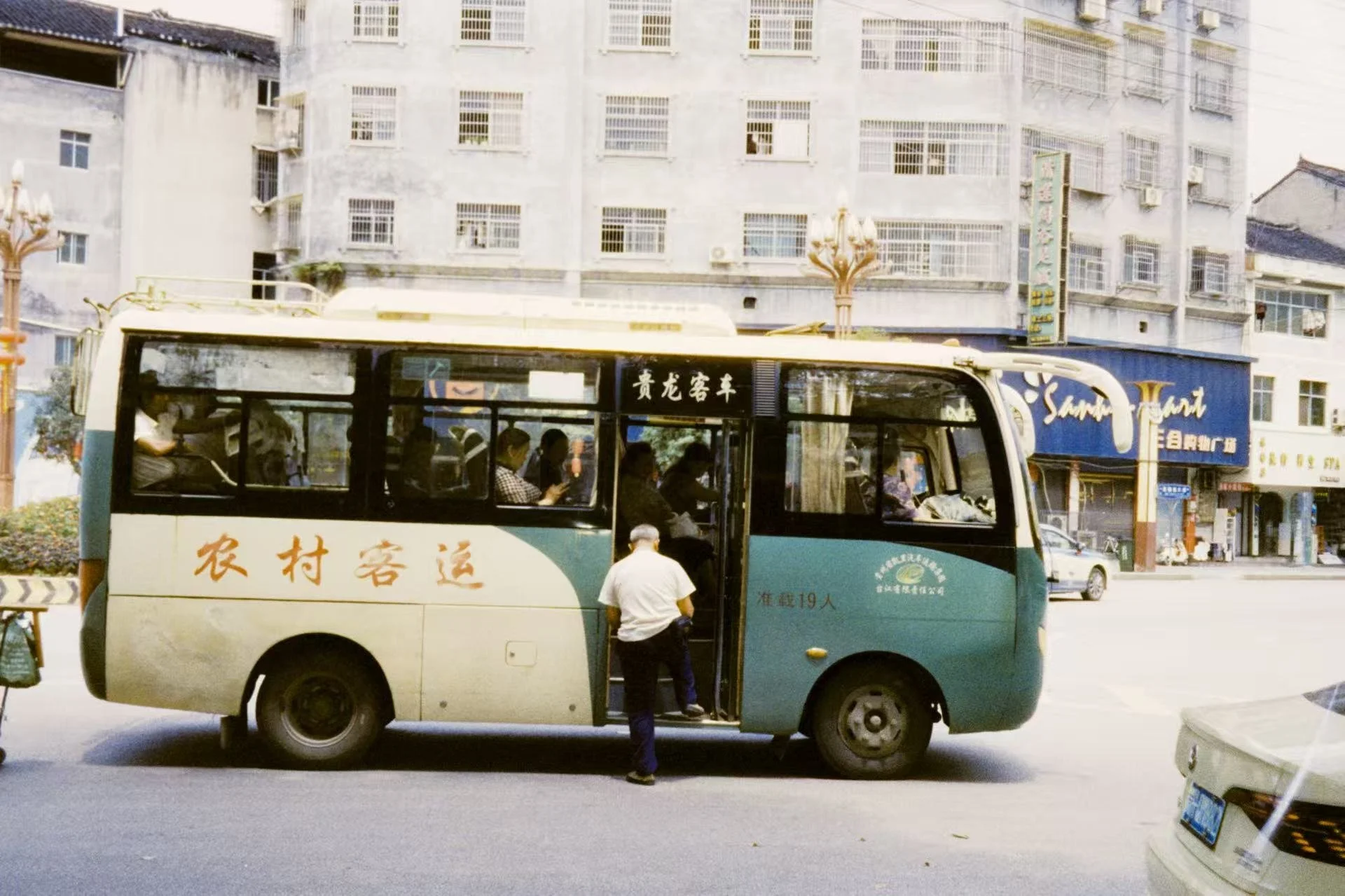
The bus I took in Shidong
Following the Shoes
My fieldwork began at the Guizhou Ethnic Museum, where I hoped to find similar footwear and learn more about its local classification. However, I found that footwear was rarely presented as an individual object. Instead, shoes were often displayed as part of complete sets of Miao ceremonial dress, sometimes without specific labels.
The following day, I visited Xiulitao, a large Miao embroidery market in Kaili. There, I encountered an elderly woman from Shidong selling a pair of embroidered footwear remarkably similar to the museum's object. When I picked them up, I was surprised by how light they felt. I asked whether they were actually shoes or socks. She answered without hesitation: they were socks.
This unexpected discovery became the central finding of my fieldwork. The boot-like objects identified as shoes in the Zurich museum's collection were, in fact, embroidered socks traditionally worn by Miao women during ceremonies.
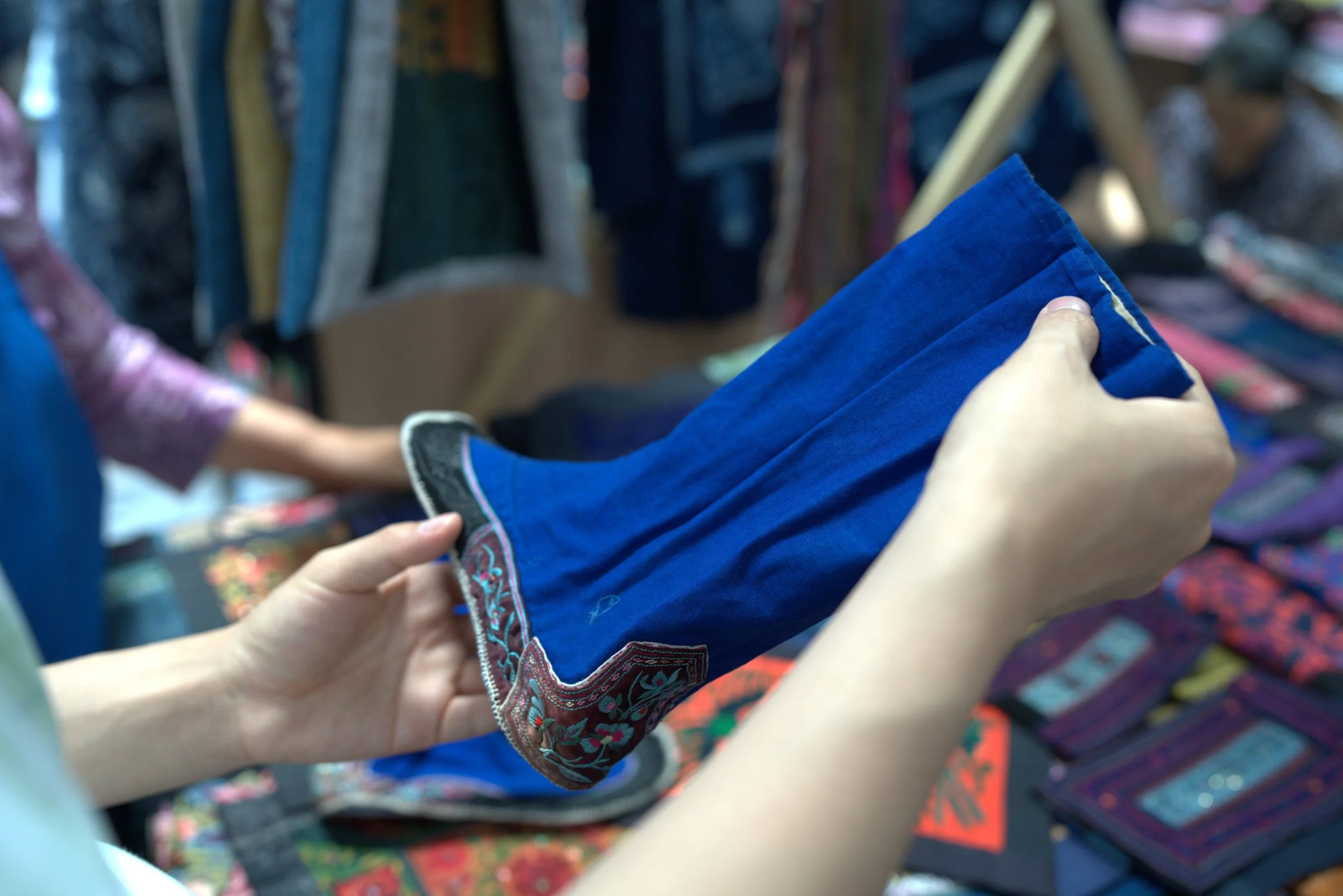
The pair of Socks she was wearing decades ago
Beyond the Name
The discovery of the socks opened up further questions about how they were worn and what they meant to the people who used them.
During wedding ceremonies, brides traditionally wear embroidered shoes over these socks, deliberately folding down the heels of their shoes. This practice, known as caigen (踩跟, stepping on the heel), is found among Miao communities in southeastern Guizhou.
Through conversations with local women, I encountered different interpretations of this custom. Some associated it with wealth and social status, while others explained it through practical considerations or beliefs surrounding death and auspiciousness. Rather than revealing a single, fixed meaning, these conversations showed how the same practice could be understood differently across individuals and communities.
Another theme that emerged was the relationship between embroidery and maternal care. Traditionally, mothers spend considerable time (sometimes years) embroidering wedding garments for their daughters. These textiles are not simply ceremonial objects but also carry memories, affection, and the labour of those who made them.
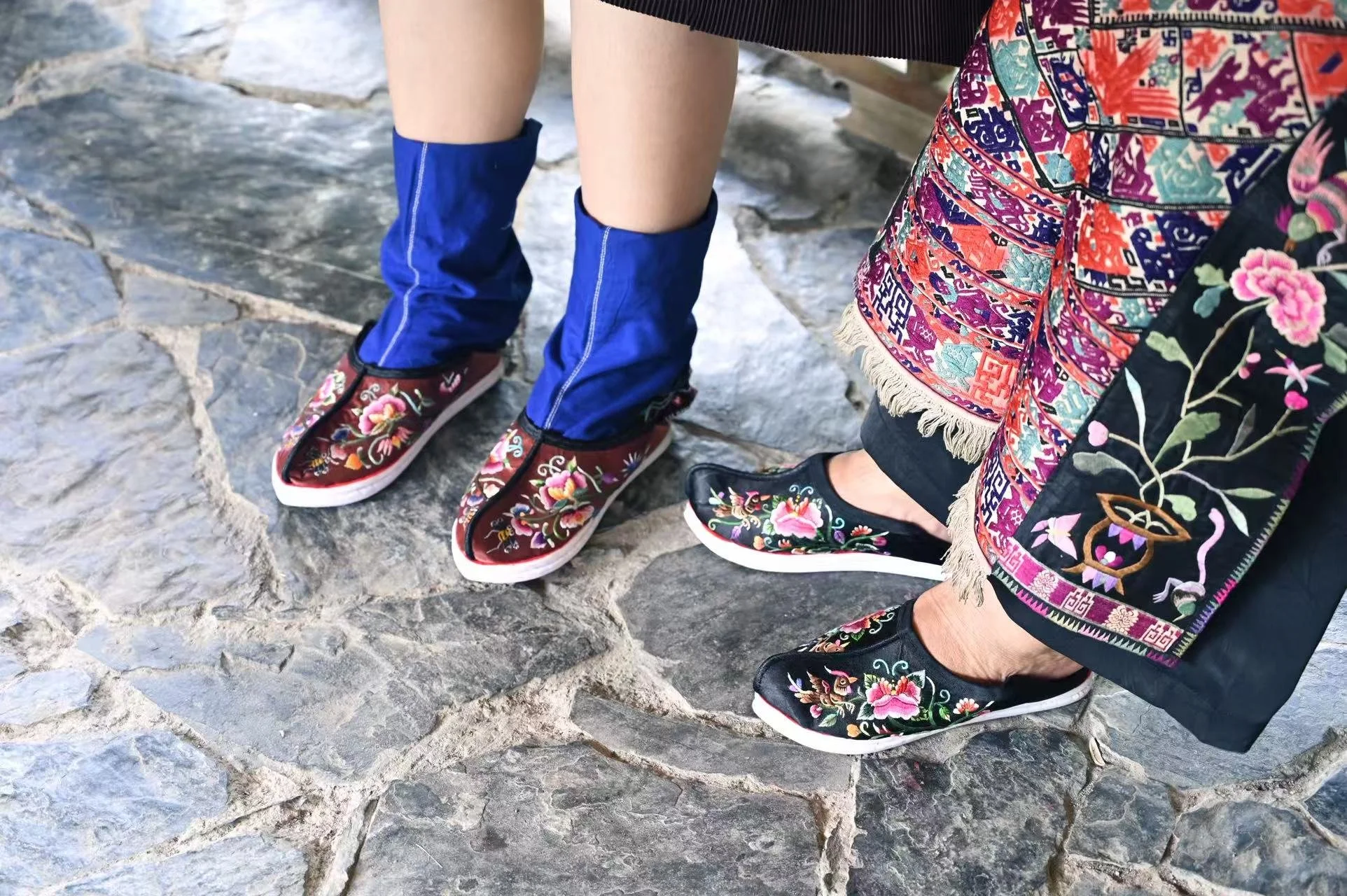
A newly married interlocutor (left) wearing socks with her mother
Fieldwork supported by the Ethnographic Museum of the University of Zurich